7 month old sleep schedule: Bedtime and nap schedule
Updated Nov 30, 2021


Headed toward a nap transition? At 7 months old, your baby may be getting ready to shift to two naps, though most continue to need three naps for another month or so. We’ll provide you with sample schedules and everything you need to know about your 7 month old’s sleep at this stage of development.
IN THIS ARTICLE
How much should a 7 month old sleep?
Ideally, your 7 month old’s sleep schedule will allow for least 14 hours of total sleep in a 24 hour period. We recommend aiming for 11 - 12 hours at night, and 2.5 - 3 hours during the day, split over three naps. However, you may find that your baby’s night sleep gets a bit shorter until they completely drop the third nap in the next month or two.
This happens when a baby needs more wake time in between sleep periods, but isn’t quite ready to drop a nap - resulting in a later bedtime and shorter night’s slumber.
[Note: for children who were born early, we go by their adjusted age for sleep development.]
Top sleep tip for your 7 month old
If your baby has transitioned to two naps and you’re suddenly seeing increased night-waking (or early waking), overtiredness may be to blame. Offer three naps 2 - 3 times per week to help “reset” their overtiredness and get them back on track.
Sleep fact for 7 month old babies
The third nap can be really hard to get at this age, despite a parent’s best efforts. Instead of trying to stretch a tired baby to their regular bedtime, offer an earlier bedtime to help offset their overtiredness.
Sample 7 month old sleep schedule
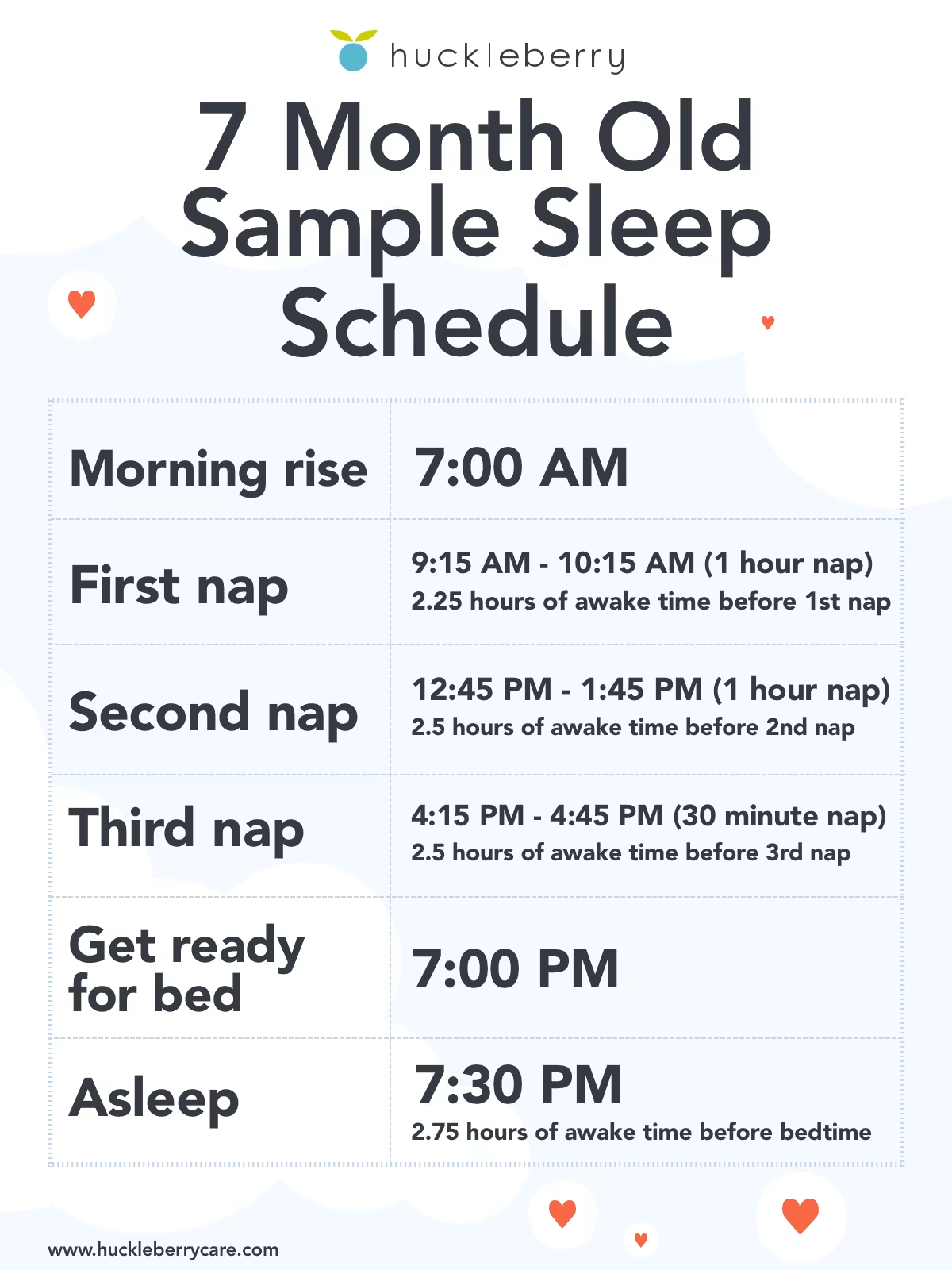
Note: Sleep needs vary by child and this chart should be viewed as an example only.
Naptime schedule for 7 month old

How long should a 7 month old nap?
A 7 month old’s nap schedule should allow for 2 - 3 hours of day sleep. Expect your baby to take 2 - 3 naps each day. Ideally, the first two (or only two) naps of the day will be at least an hour long. For babies taking three naps, the last nap is expected to be a shorter power nap of 30 - 45 minutes long. Most babies need between 2.25 - 3.5 hours of awake time in between naps to be sufficiently tired.
How many naps for a 7 month old?
Most 7 month old babies need three naps a day. However, it’s common to see nap resistance at this age, as babies continue to need longer wake times in order to build sufficient sleep pressure (this homeostatic pressure helps ensure that a baby is tired enough to sleep well).
This tends to result in a lot of skipped third naps. As a result, your 7 month old’s nap schedule may not be as predictable as you would like.
Some babies will begin to transition to two naps on the earlier side. We find that babies with strong independent sleeping skills tend to drop naps earlier. If this describes your baby, you’ll want to be on the lookout for signs of the next nap transition, which include a pattern of shorter naps, skipped naps, and/or less than 10 hours of night sleep.
When your baby starts to transition to a 2-nap schedule, they’ll likely toggle between some 2-nap days and some 3-nap days until they’re ready to fully drop that third nap.
2-nap schedule
3-nap schedule
Bedtime for 7 month old
Ideally, your 7 month old will be getting 11 - 12 hours of sleep at night, so bedtime should be 12 - 13 hours after waking in the morning. That said, if your baby needs longer wake windows on the 3-nap schedule, your baby may only be able to sleep for 10 - 11 hours at night. In those cases, bedtime will be 13 - 14 after waking for the day.
Keep in mind that the timing of the last nap will impact bedtime as well. Since your baby needs at least 2.5 hours of wake time before bed, you’ll want to consider the timing of the last nap when planning bedtime. In some cases, it’s better to offer an earlier bedtime instead of a very late third nap (as that can diminish night sleep).
What time should a 7 month old go to bed?
It’s common for babies to go to bed between 7:00 PM - 8:00 PM, however, the best bedtime for your baby depends on their morning rise time, and the time their last nap ended.
Share article:
Note: The content on this site is for informational purposes only and should not replace medical advice from your doctor, pediatrician, or medical professional. If you have questions or concerns, you should contact a medical professional.
Share article:


