15 month old sleep schedule: Bedtime and nap schedule
Updated Nov 30, 2021


At this age, there are lots of transitions. Your child is kind of a baby, and kind of a toddler. Many 15 month olds tend to be in a state of transition with sleep - sometimes needing two naps, and sometimes one nap. It can drive you a bit bonkers figuring out whether it’s going to be a one nap or two nap day, since it may depend on how your child slept overnight, what time they woke up, and how long the first nap was! Read on to learn what you can do to help your child through this transition and establish healthy sleep habits.
IN THIS ARTICLE
How much should a 15 month old sleep?
At this age, we recommend aiming for at least 13 hours of total sleep over a 24 hour period, with a minimum of 11 hours at night, and 2 - 3 hours during the day, split between 1 or 2 naps.
[Note: for children who were born early, we go by their adjusted age for sleep development.]
Top sleep tip for 15 month olds
It’s not uncommon for 15 month olds to be a bit overtired during the transition from two naps to just one. As children drop the second nap, some will nap less than the recommended 2 - 3 hours during the remaining nap.
When total daytime sleep is less than ideal (2 - 3 hours), it’s best to offer an early bedtime (but no earlier than 12 hours before your desired morning wake up time). It can take a few weeks for the remaining nap to lengthen, so hang in there!
Sleep fact for 15 month olds
If your child is struggling to fall asleep at nighttime, or waking up early, ill-timed exposure to light could be to blame. Light entering your child’s eyes sets their circadian rhythm, or body clock, signaling their body to decrease melatonin levels.
To help your child get on a more predictable schedule, wake them within 30 minutes of your desired wake-up time every day (even if it was a rough night), and be intentional about light exposure. Start your child’s day with bright light upon waking, and get outside during the day when possible.
Pediatric sleep and baby development experts also recommend avoiding screen time in the hour before bed. Electronic devices such as TVs, tablets, and phones emit blue light, which interferes with melatonin production, making it difficult to fall asleep.
Sample 15 month old sleep schedule

Note: Sleep needs vary by child and this chart should be viewed as an example.
Naptime schedule for a 15 month old
15 month olds who have transitioned to a one nap schedule will need between 5 - 5.5 hours of awake time before their nap in order to be tired, but not too tired. 15 month olds who are taking two naps per day sleep best with about 3.25 hours of awake time before the first nap, and about 3.75 hours of awake time before their afternoon nap.
How long should a 15 month old nap?
At 15 months, we hope to see between 2 - 3 hours of total daytime sleep. For children who haven’t yet transitioned to one nap per day, it’s helpful to limit the first nap to 90 minutes.
How many naps for a 15 month old?
By 15 months old, some children have outgrown the 2-nap schedule, leaving just 1 nap around lunchtime. Other toddlers this age still need 2 naps per day. It’s also not uncommon for the number of naps to vary from day to day at 15 months; some days will be 2-nap days, while others will be a 1-nap day.
By 18 months, your child should typically complete the transition to a 1-nap schedule, but there’s no need to rush it. Signs that your child is ready to drop a nap include very short naps, resisting 1 or both naps, or consistently sleeping less than 10 hours a night.
2-nap schedule
1-nap schedule
Bedtime for a 15 month old
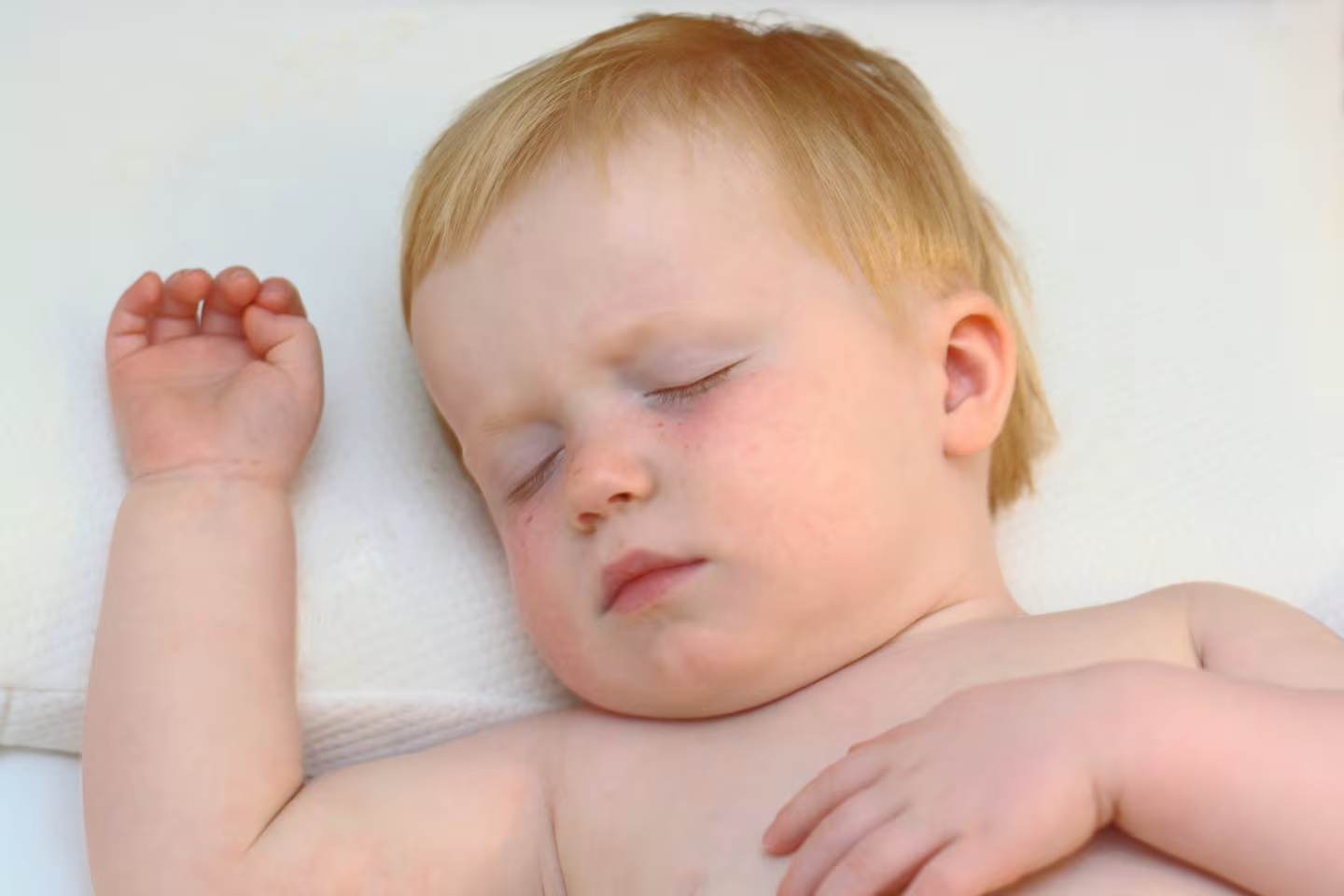
15 months is such a fun age, with lots of laughs, and what can seem like boundless energy! As bedtime approaches, you may notice your child becoming even more “energetic,” however, hyperactivity is actually a sign of being overtired.
To avoid bedtime meltdowns related to overtiredness, we recommend keeping a close eye on the clock, and ensuring you’ve factored in sufficient wind-down time for your child before bed. Try to make the hour before bedtime calm and relaxing, with more exciting play occurring earlier in the day.
For example, your child’s nightly bedtime routine can include a warm bath, massage, changing into sleep clothes, and cuddling up for story time and songs. At this age, we expect it to take 10 - 20 minutes (on average) for children to fall asleep.
What time should a 15 month old go to bed?
You’ll want to base bedtime on how long your child has been awake, along with your desired wake-up time. At this age, the goal is for at least 11 hours of nighttime sleep. If your desired wake-up time is 6:30 AM, your 15 month old’s bedtime should be 7:30 PM. However, if it was a short nap day, you may want to offer an early bedtime to avoid overtiredness and ensure your child gets enough sleep.
Share article:
Note: The content on this site is for informational purposes only and should not replace medical advice from your doctor, pediatrician, or medical professional. If you have questions or concerns, you should contact a medical professional.
Share article:


